
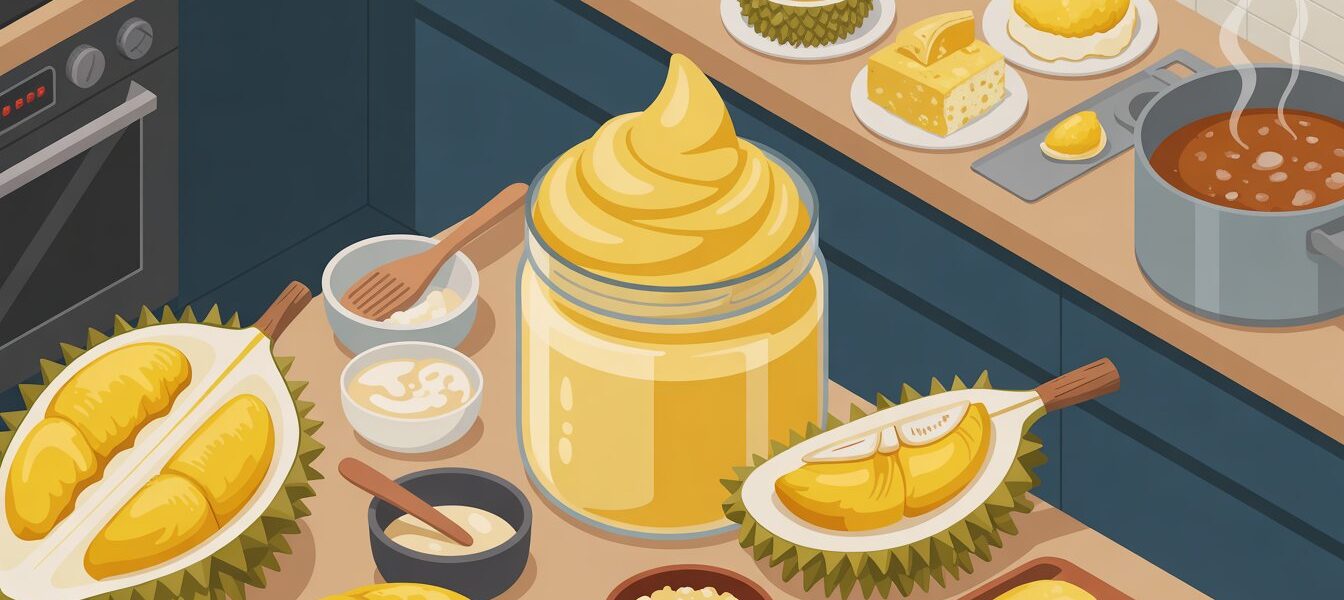
Durian paste is a concentrated form of durian fruit made by boiling and pureeing its flesh. It offers a smooth, creamy texture and a distinctive taste that blends sweet, savory, and slightly bitter notes. This paste is widely used in Southeast Asian cooking and baking as a convenient and flavorful ingredient for desserts and pastries.
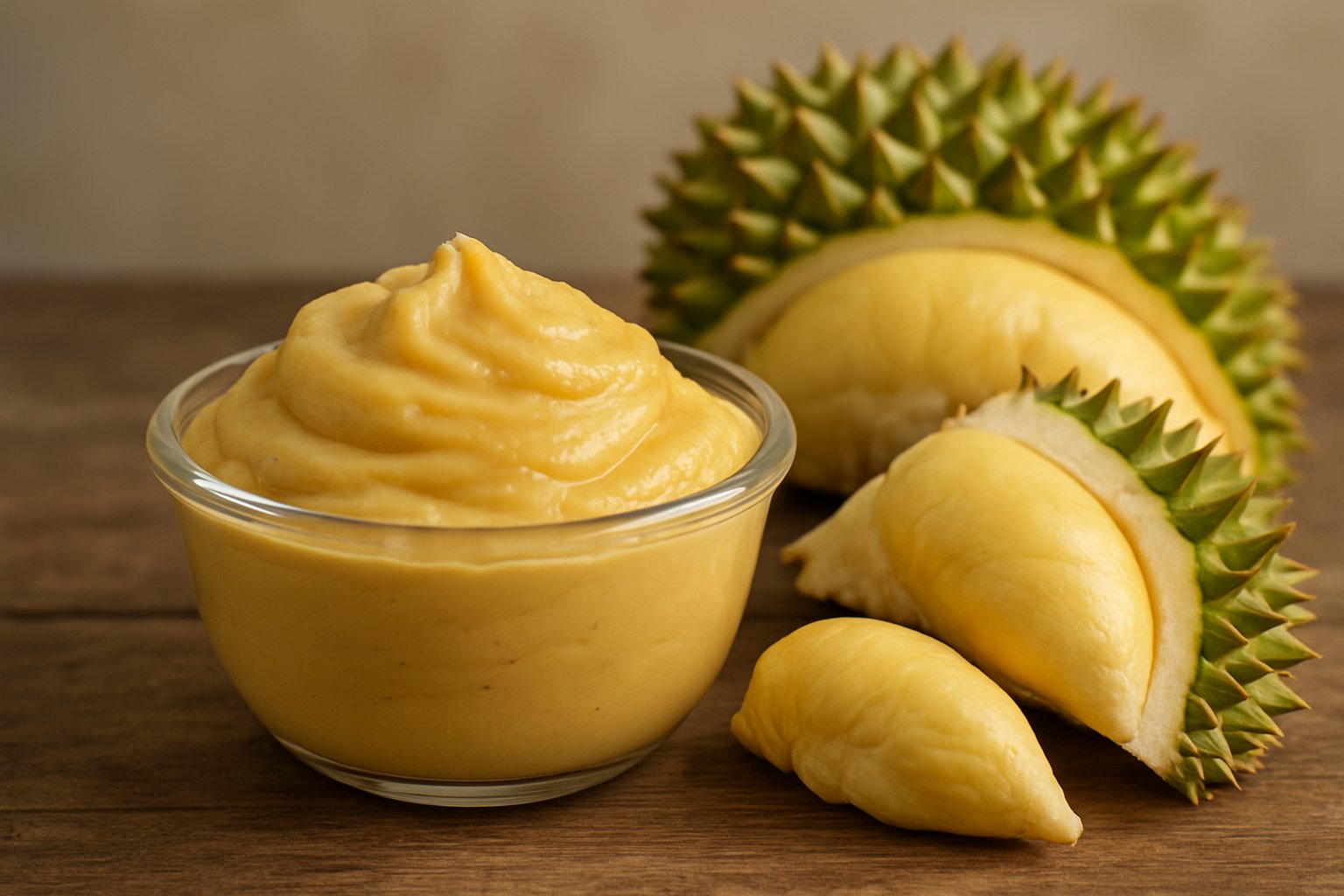
Unlike fresh durian, which requires peeling and seed removal, durian paste simplifies preparation while preserving the rich aroma and custard-like essence of the fruit. It can be stored easily and used in a variety of recipes, such as mooncakes, ice cream, and buns, making durian more accessible to both home cooks and commercial producers.
Durian paste is sometimes confused with durian puree, but paste typically has a thinner consistency and is mixed with natural liquids to enhance its texture. It is often made from premium varieties like the Thai Monthong durian, known for its superior flavor and quality. More details about its uses and qualities can be found at how to use durian paste.
Introduction to Durian Paste and Tempoyak
Durian paste and tempoyak represent unique forms of using durian fruit beyond its fresh consumption. Both offer different preparations and cultural importance rooted in Southeast Asia. Their textures, flavors, and uses vary, reflecting specific culinary traditions.
What is Durian Paste?
Durian paste is a soft, smooth product made by processing the flesh of the durian fruit. It generally involves cooking or pureeing the ripe durian to create a creamy texture that can be used in desserts, sauces, or spreads. Durian paste retains the fruit’s signature flavor, which is rich, sweet, and slightly bitter.
This paste is often incorporated into sweets such as cakes or ice cream. Unlike raw durian, the paste can extend shelf life and is easier to mix with other ingredients. It serves as a versatile base in durian-based recipes.
What is Tempoyak?
Tempoyak is a fermented durian paste traditionally produced by mixing durian flesh with salt and allowing it to ferment at room temperature for several days. This process develops a tangy, sour flavor distinct from fresh durian’s sweetness. The fermentation also preserves the fruit for longer periods.
Commonly consumed in Malaysia and Indonesia, tempoyak is used as a condiment, ingredient in curries, or mixed with chili to make a spicy dip. Its sour profile differentiates it from plain durian paste, highlighting fermentation’s role in flavor transformation and preservation.
History and Culture of Tempoyak
Tempoyak has a long-standing history in the Malay Archipelago, especially in regions where durian grows abundantly. Traditionally produced during durian season, it allowed communities to preserve excess fruit beyond its natural shelf life. The fermentation process was a practical solution to reduce waste.
Over time, it evolved from simple preservation to a valued ingredient integrated into local culinary practices. Its preparation reflects traditional knowledge passed through generations, emphasizing natural fermentation methods without artificial additives. This history ties tempoyak closely to agrarian and communal lifestyles.
Ethnic Significance in Malay and Indonesian Cuisine
Tempoyak holds particular ethnic significance for Malay and Indonesian communities. It is regarded as a specialty that showcases local flavors and traditional food processing skills. Among these groups, tempoyak is both a staple and a cultural marker.
In Malay cuisine, tempoyak is often used in distinctive dishes like tempoyak curry. Indonesian communities, particularly in regions like Kalimantan, employ tempoyak similarly, valuing its role in seasonal cooking. It reflects local identity and continuity in ethnic culinary heritage. This fermented paste is more than food; it represents cultural resilience and regional culinary diversity.
For detailed exploration, see the research on traditional Indonesian fermented durian paste and additional notes on tempoyak’s ethnic culinary role.
Types and Flavors of Durian Paste
Durian paste varies widely depending on the durian variety used, influencing flavor, texture, and aroma. Each type reflects unique characteristics, appealing to different preferences in sweetness, creaminess, and intensity.
Musang King Durian Paste
Musang King durian paste is prized for its rich, buttery texture and bittersweet flavor with a pronounced creamy mouthfeel. It comes from the Musang King cultivar, known for its bright yellow flesh and distinctive bittersweet taste.
This durian paste offers a robust aroma without being overpowering. Its sweetness is balanced by slight bitterness, making it ideal for pastries or desserts needing a complex flavor profile.
Due to its premium status and intense flavor, Musang King durian paste is often more expensive and sought after by connoisseurs who prefer depth and vibrancy in durian-based products.
XO Durian Paste
XO durian paste is named after the XO variety of durian, which is less sweet but highly aromatic. It features a smoky, slightly alcoholic undertone derived from a natural fermentation process during ripening.
This paste is drier and less creamy compared to other types, offering a complex texture that blends sweet, bitter, and pungent notes. Its strong aroma appeals to those who appreciate durian’s boldest characteristics.
XO durian paste works well as a flavor enhancer in both sweet and savory dishes, where its unique taste can add depth without overwhelming other ingredients.
D24 Durian Paste
D24 durian paste is recognized for its creamy texture and moderately sweet flavor. It originates from the D24 cultivar, favored for its smooth, custard-like flesh and balanced aroma.
This paste has a more subtle durian scent and less bitterness compared to the Musang King version. Its sweetness and creaminess make it a versatile ingredient, suitable for cakes, ice creams, and candies.
D24 paste strikes a good balance between flavor and accessibility, often recommended for people new to durian or for recipes requiring a milder durian taste.
Kampung Durian Paste
Kampung durian paste, made from traditional village-grown durians, varies widely in flavor depending on ripeness and local growing conditions. It generally has a less intense aroma and a smoother, more fibrous texture.
This paste tends to be less sweet and can sometimes have earthy undertones, reflecting the natural and less cultivated fruit. It is often used in homemade or rustic desserts.
Kampung durian paste is typically more affordable and accessible but less uniform in flavor, appealing to those who prefer a natural, less processed durian experience.
| Durian Paste Type | Texture | Flavor Profile | Aroma | Common Use |
|---|---|---|---|---|
| Musang King | Buttery, creamy | Bittersweet, rich | Strong but balanced | Premium desserts, pastries |
| XO | Dry, complex | Smoky, slightly bitter | Very strong | Flavor enhancer, savory & sweet |
| D24 | Creamy, smooth | Mildly sweet, balanced | Subtle | Ice cream, cakes, candies |
| Kampung | Fibrous, smooth | Earthy, less sweet | Mild | Rustic desserts, homemade |
Production and Fermentation Process
Durian paste, known as tempoyak, undergoes a specific production method involving key ingredients and controlled fermentation. Its creation is influenced by traditional preparation, microbial activity, chemical changes, and modern processing techniques.
Traditional production of tempoyak
Tempoyak is traditionally made by mixing overripe durian pulp with salt, generally at 1.3 to 3.0% concentration. The salted mixture is then placed in a covered container and left to ferment at room temperature for three to five days. This process is usually performed during durian season when there is excess fresh durian.
The fermentation takes place under anaerobic conditions, allowing lactic acid bacteria to thrive. The paste develops a creamy texture and a slightly sour, pungent flavor distinct from fresh durian. Salt acts as a preservative, inhibiting spoilage microorganisms.
Methods of review
Studies of tempoyak often involve microbiological analysis, chemical profiling, and sensory evaluation. Researchers use controlled fermentation setups with temperature regulation to observe changes in pH, microbial populations, and volatile compounds.
Physical properties such as texture and color are measured alongside chemical parameters like sugar content, acidity, and alcohol levels. Microbial sequencing techniques may be applied to identify the specific bacterial strains responsible for fermentation.
Role of ingredients to make tempoyak
The primary ingredients are durian pulp and salt. Durian provides sugars necessary for fermentation and contributes to the final flavor profile. Salt not only preserves the paste but also regulates microbial growth, favoring beneficial bacteria.
Sugar in durian aids the production of alcohol and lactic acid by fermenting microbes. Water content affects texture and fermentation speed. No additional starter cultures are needed as the natural microflora on durian and in the environment initiate fermentation.
Processing technologies before probiotic microbial fermentation in tempoyak production
Before fermentation, durian pulp is separated from seeds and mixed thoroughly with salt. In some modern adaptations, temperature-controlled fermentation chambers are used to maintain optimal conditions between 25-30°C.
Steps such as cleaning the durian and sterilizing containers may be performed to reduce unwanted contamination. No heavy processing or additives are involved, maintaining the fermentation’s natural and traditional integrity.
Microbial aspect in tempoyak fermentation
Lactic acid bacteria (LAB) dominate tempoyak fermentation, particularly species like Lactobacillus. These bacteria convert sugars into lactic acid, lowering pH and creating an acidic environment that preserves the paste.
Other microbes include yeasts that produce alcohol during fermentation. This mixed microbial activity results in probiotic characteristics, with tempoyak recognized as a rich source of beneficial bacteria that may support gut health.
Chemical composition of durian and tempoyak
Durian pulp is high in carbohydrates, mainly sugars like glucose and fructose, with moderate protein and fat content. It contains sulfur compounds responsible for its distinctive aroma.
During fermentation, sugar levels decrease as they are metabolized into lactic acid and ethanol. pH drops from near neutral to acidic (around 4–4.5), enhancing preservation. Volatile fatty acids and other compounds develop, giving tempoyak its complex flavor and aroma.
How to Enjoy Durian Paste and Tempoyak
Durian paste and tempoyak offer diverse culinary uses that enhance both sweet and savory dishes. Their rich, creamy texture and unique flavor can be adapted to desserts, beverages, and traditional meals.
8 Easy Recipes With Durian Paste
Durian paste can be incorporated into a variety of recipes for a flavorful boost. It pairs well with baked goods, ice cream, and creamy desserts. Many recipes call for tempering the paste to room temperature first to blend smoothly.
Common uses include mixing durian paste into batters, folding it into frosting, or stirring it into smoothies. Cooking with durian paste requires balancing its strong taste with complementary ingredients like coconut milk, sugar, or cream. It is versatile, suitable for both modern and traditional recipes.
Durian Ice Cream
Durian ice cream highlights the creamy, custard-like quality of durian paste. The paste is blended with cream, milk, and sugar before being churned to a smooth, cold texture.
A quality durian ice cream balances the strong durian aroma with sweetness and creaminess. The dessert is popular in Southeast Asia and pairs well with tropical fruits or sticky rice. Chilling allows the durian flavor to mellow, making it more accessible to a wider palate.
Durian Crepe
Durian crepes use thin, tender pancakes filled with whipped cream and durian paste. The combination brings out the fruit’s rich sweetness alongside light creaminess.
Crepes are cooked until just golden, then layered or rolled with a generous spread of durian paste. The softness of the crepe and cool filling softens the durian’s intensity, creating a balanced, indulgent dessert.
Snowskin Durian Mooncake
Snowskin durian mooncakes feature a chewy, translucent outer layer enclosing a rich durian paste filling. These mooncakes are served chilled, offering a refreshing take on a traditional treat.
The paste provides creamy sweetness inside the soft, glutinous skin. This dessert is often enjoyed during the Mid-Autumn Festival and highlights durian’s adaptability in celebratory baked goods.
Durian Milkshake
Durian milkshakes combine durian paste, milk, and ice for a thick, flavorful drink. Blending the paste with cold milk tones down the fruit’s distinctive odor while emphasizing its sweet custard-like flavor.
Sugar or condensed milk is often added to balance tartness. The shake can be garnished with crushed nuts or pandan leaves for added texture and aroma.
Durian Tarts
Durian tarts use durian paste as a filling in a crisp pastry shell. The tart crust offers a contrast to the soft, creamy durian filling, enhancing the overall texture.
The filling is often mixed with cream or custard to stabilize the fruit’s flavor. Garnishing with toasted coconut or nuts provides additional crunch. These tarts are popular for serving at gatherings or tea time.
Durian Crepe Cake
Durian crepe cakes are made by layering multiple thin crepes with durian paste and whipped cream between each layer. The resulting cake is soft, moist, and rich.
The delicate crepe layers prevent the durian from overwhelming the dessert. Chilling before serving helps the flavors meld. This cake is a modern dessert that showcases the paste’s versatility in complex preparations.
Durian Cheesecake
Durian cheesecake blends durian paste into a creamy cheesecake base. This fusion dessert balances the tang of cream cheese with durian’s sweet earthiness.
The paste is mixed thoroughly into the batter before baking, often with a graham cracker or biscuit crust. The rich texture and layered flavors make it a popular choice among durian enthusiasts seeking a Western-style dessert.
Durian Chiffon Cupcakes
Durian chiffon cupcakes incorporate durian paste into light, airy cupcake batter. The paste enhances flavor without adding heaviness due to chiffon’s soft texture.
These cupcakes typically have a subtle durian aroma and moist crumb. Frosting with durian-flavored cream or buttercream complements the cake, making them suitable for parties and special occasions.
Health Benefits and Nutritional Value
Tempoyak, a fermented durian paste, retains much of the original fruit’s nutrition while gaining unique compounds through fermentation. This combination results in a product rich in essential nutrients, bioactive substances, and probiotic benefits that may support digestion and overall health.
Nutritional value of tempoyak
Tempoyak is a concentrated source of macronutrients and micronutrients typical of durian. It contains carbohydrates, mainly natural sugars, providing a quick energy boost. It also has small amounts of protein and fats, including heart-healthy monounsaturated fats.
Key vitamins such as vitamin C and B-complex vitamins survive the fermentation process to some extent. Tempoyak is an excellent source of minerals like potassium and magnesium, which are important for muscle function and bone health. The fermentation may slightly alter nutrient levels but generally preserves the fruit’s rich profile.
| Nutrient | Approximate Content per 100g | Role in Health |
|---|---|---|
| Carbohydrates | 20-30g | Energy source |
| Protein | 1-2g | Tissue repair and enzyme function |
| Fats | 3-5g | Heart health, cell function |
| Vitamin C | 10-15 mg | Antioxidant, immune support |
| Potassium | 400-500 mg | Blood pressure regulation |
| Magnesium | 30-40 mg | Bone strength, muscle function |
Bioactive compounds in tempoyak
Fermentation enhances tempoyak’s bioactive profile by generating beneficial compounds like organic acids and antioxidants. These substances help reduce oxidative stress, a factor in many chronic diseases.
The fruit itself contains polyphenols and flavonoids, which provide anti-inflammatory effects. During fermentation, lactic acid bacteria synthesize additional bioactives that may contribute to antimicrobial and immune-boosting properties.
Overall, tempoyak offers a complex range of compounds that interact synergistically, supporting health beyond basic nutrition.
Probiotic potential and health advantages
Tempoyak is rich in live microorganisms due to its natural fermentation. These probiotic bacteria can improve the balance of gut microbiota, aiding digestion and nutrient absorption.
Regular consumption of probiotics may support immune function and reduce gastrointestinal issues like bloating and constipation. The fermentation process ensures these microbes can survive in sufficient numbers to confer benefits.
This probiotic quality makes tempoyak not only a nutrient source but also a functional food with potential positive effects on gut health.
Beneficial health effects of tempoyak
Tempoyak’s combined nutrients, bioactive compounds, and probiotics contribute to various health advantages. It may help lower blood pressure due to potassium content and support bone strength thanks to magnesium.
The anti-inflammatory and antioxidant effects can reduce cellular damage and slow signs of aging. Digestive health improves as probiotics modulate gut flora and enhance digestion.
Additionally, tempoyak may aid in anemia prevention by supporting red blood cell function through its vitamin and mineral content. Despite being flavorful and distinct, it offers a resourceful way to boost wellness naturally.
More on durian’s health impact can be found at Organic Facts.
Ordering and Delivery Options
Durian paste can be acquired through multiple convenient methods tailored to different customer needs. These include picking up orders directly from stores, local delivery services, and nationwide shipping options, each with distinct features that ensure freshness and prompt fulfillment.
ORDER PICKUP
Order pickup allows customers to collect durian paste directly from physical stores or specialty markets. This option is ideal for those who want immediate access without waiting for delivery times. Many Asian markets and specialty grocers provide curbside or in-store pickup services.
Pickup orders often require advance placement, usually via a website or app, to ensure availability. Customers benefit from avoiding shipping costs and can inspect the product quality before leaving. Retailers typically prioritize freshness by scheduling pickups around product arrival times to ensure durian paste maintains optimal quality.
LOCAL DELIVERY
Local delivery services offer quick and convenient access to durian paste, often within a few hours. Platforms like Instacart provide contactless delivery options in select urban areas, focusing on same-day or one-hour fulfillment.
This method suits customers who want fresh durian paste without leaving their homes. Delivery fees vary but may be waived for first-time orders or above minimum purchase amounts. Retailers and marketplaces emphasize careful packaging and cold storage to preserve the paste’s texture and flavor during transit.
NATIONWIDE DELIVERY
Nationwide delivery services ship durian paste across the country, ensuring availability even in areas without local vendors. Companies like Weee! feature free or low-cost nationwide shipping, often with minimum order requirements.
Orders are packaged to maintain freshness over longer distances, typically using refrigerated or insulated containers. Shipping times may range from a day to several days depending on location. Customers receive tracking information and can expect careful handling to prevent quality degradation.
For more information on purchasing options, visit platforms offering durian paste delivery and fast local orders.
FAQs About Durian Paste and Tempoyak
Durian paste and tempoyak have specific ingredients, uses, and storage methods. Their production involves fermentation challenges, and ongoing research aims to improve understanding and application of this traditional food.
What is durian paste made of?
Durian paste is primarily made from the flesh of ripe or overripe durians. In the case of tempoyak, the durian flesh is mixed with salt and left to ferment at room temperature for several days, typically between three to seven. This fermentation creates a sour, sweet, and slightly bitter flavor profile.
The process relies on natural microbial activity without adding commercial starters. The salt acts as a preservative and controls fermentation. The finished product is a creamy, yellowish paste with a strong durian aroma.
What can I do with durian paste?
Durian paste, especially tempoyak, is versatile in Southeast Asian cuisine. It is often used as a condiment, mixed into coconut milk curries, or combined with chilies to make spicy dips.
Chefs may add it to sauces or use it as a flavor enhancer in seafood and fish dishes. It can also serve as a marinade ingredient or be eaten alongside rice and vegetables. Its distinct taste complements savory and spicy food well.
How do you store durian paste?
Durian paste should be stored in an airtight container to prevent contamination. At room temperature, it can last a few days during fermentation, but after fermentation, refrigeration is recommended to slow further fermentation and spoilage.
For long-term storage, freezing is possible but may alter texture and flavor. Proper hygiene during handling is essential to avoid unwanted bacterial growth.
Challenges of tempoyak production
Tempoyak production faces several challenges, such as controlling consistent fermentation due to reliance on natural microbes. The environmental conditions like temperature and humidity heavily influence the process and final taste.
There is also a risk of contamination that can spoil the paste or produce off-flavors. Variability in durian ripeness and salt levels affects product quality. These factors make standardization and mass production difficult. Research aims to identify microbial strains to improve consistency.
Future and development of tempoyak
Scientific interest in tempoyak is growing, focusing on microbial dynamics and potential health benefits. Studies aim to isolate beneficial bacteria to standardize fermentation and enhance safety and flavor.
There is also exploration of tempoyak’s use beyond traditional dishes, including functional foods or probiotics. Improved packaging and preservation techniques could expand its market reach. This ongoing research is crucial for integrating tempoyak into modern culinary and commercial contexts. For more on its microbial and culinary significance, see this exploration of fermented durian paste.